As seen on This Morning
 Oats jar
 Butter crock
Can Glass Food Containers Go in the Oven, Freezer and Microwave?
Nestware Kitchen
Glass containers are brilliant for leftovers and meal prep: they don't stain, don't hold smells and can go places plastic can't. But "can it go in the oven?" is one of the most common questions we get, and the answer depends on two things: what kind of glass it is, and which part you're asking about.
Borosilicate vs soda-lime glass
Most everyday glassware (drinking glasses, cheap jars) is soda-lime glass. It's fine at room temperature but doesn't love sudden temperature changes.
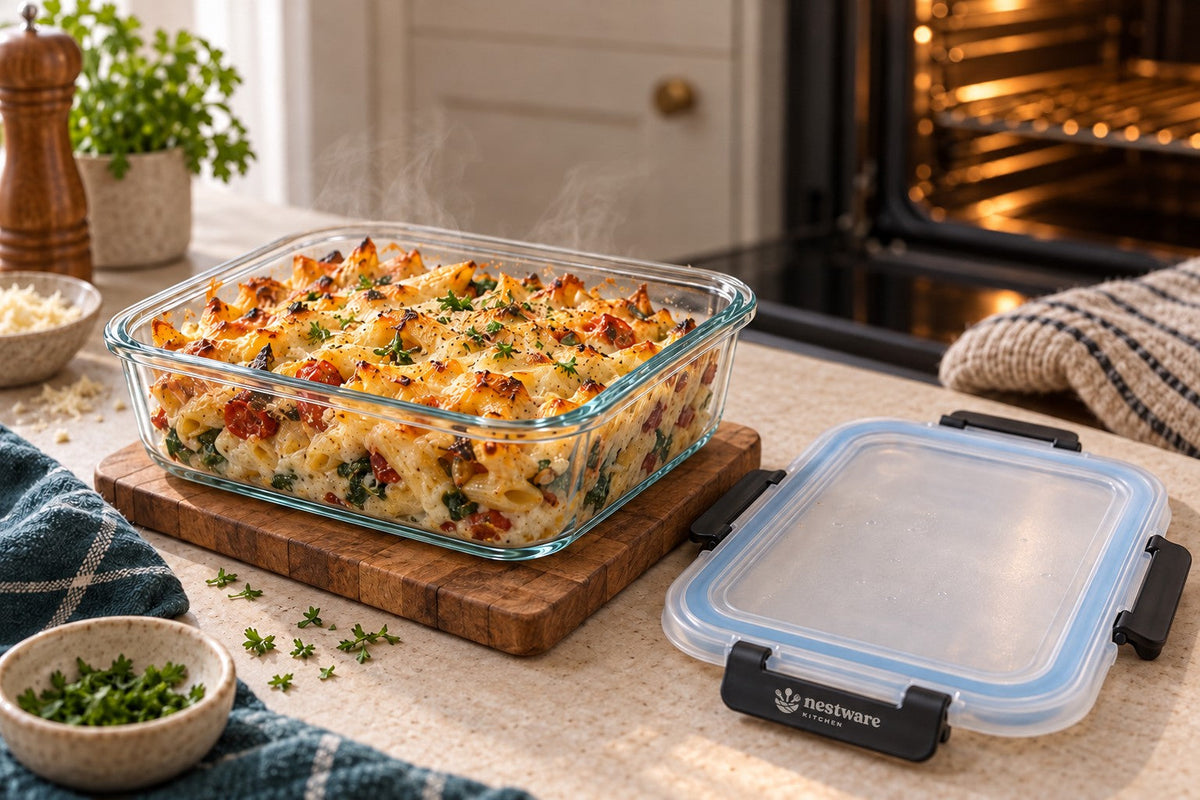
Borosilicate glass is the tougher stuff used in lab equipment and good bakeware. It expands much less when heated, so it copes far better with heat and cold. Our meal prep containers are borosilicate, rated from -20°C to 300°C.
What's safe where (for our containers)
- Oven: glass yes, up to 300°C. Lid no.
- Microwave: glass yes. Take the lid off completely first.
- Freezer: glass and lid both yes.
- Dishwasher: glass yes; lids on the top rack.
The lids are food-grade, BPA-free plastic with a silicone seal. They're what make the containers airtight and leakproof, but plastic and ovens don't mix, so lids always come off before heating.
The one mistake that cracks glass: thermal shock
Even borosilicate glass doesn't like going straight from one extreme to another. Avoid:
- Taking a container from the freezer straight into a hot oven. Thaw it in the fridge overnight first, or put it into a cold oven and let them heat up together.
- Putting a hot dish straight onto a cold, wet worktop or into cold water. Rest it on a tea towel or a wooden board.
- Adding cold liquid to a hot glass dish.
- Using it on the hob or under a grill element. Glass containers are for the oven, not direct heat.
How full should you fill glass for the freezer?
Leave about 2cm of space at the top. Liquids like soups and stews expand as they freeze, and need somewhere to go.
Is glass better than plastic for food storage?
For most things, yes. Glass is non-porous, so it won't absorb tomato stains or curry smells, it doesn't warp in the dishwasher, and you can reheat food in it. It's heavier than plastic, so for a picnic or a kids' lunchbox, plastic still has its place.
Which size do I need?
The 1040ml container holds a full main-meal portion. The 10 pack adds five 370ml tubs, which are ideal for snacks, sauces, dressings and baby portions, and they nest inside the big ones when empty.
Made with: Nestware Glass Meal Prep Containers
Borosilicate glass, -20°C to 300°C, four-clip leakproof lids, independently lab-tested and guaranteed for life.